Fri November 13th Closed
Zine
Bay Area Now 10: A Conversation with the Co-curators
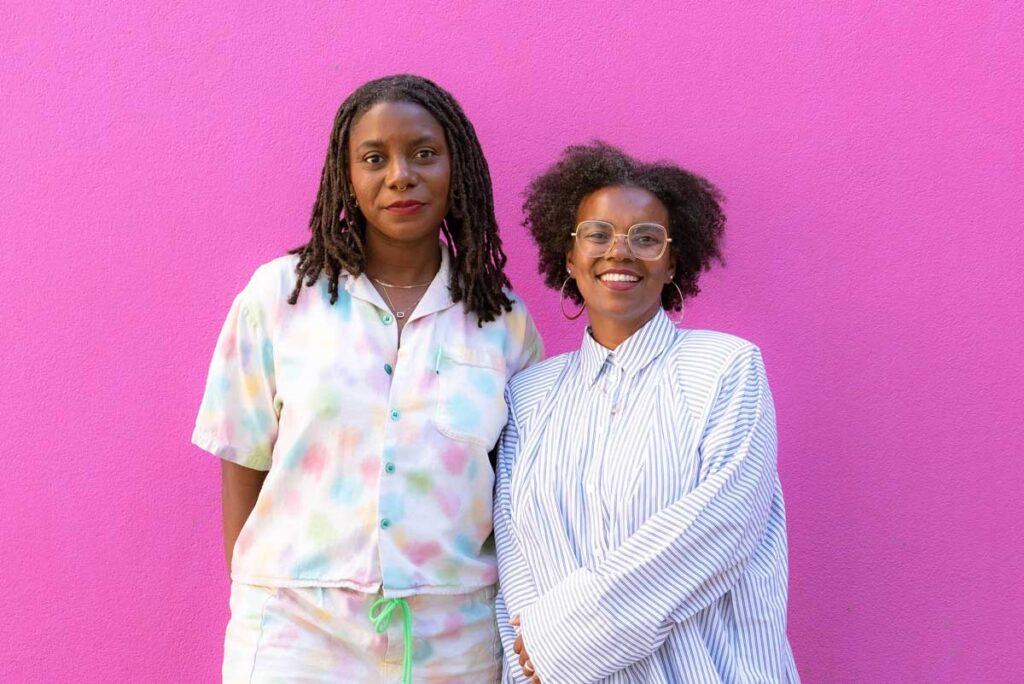
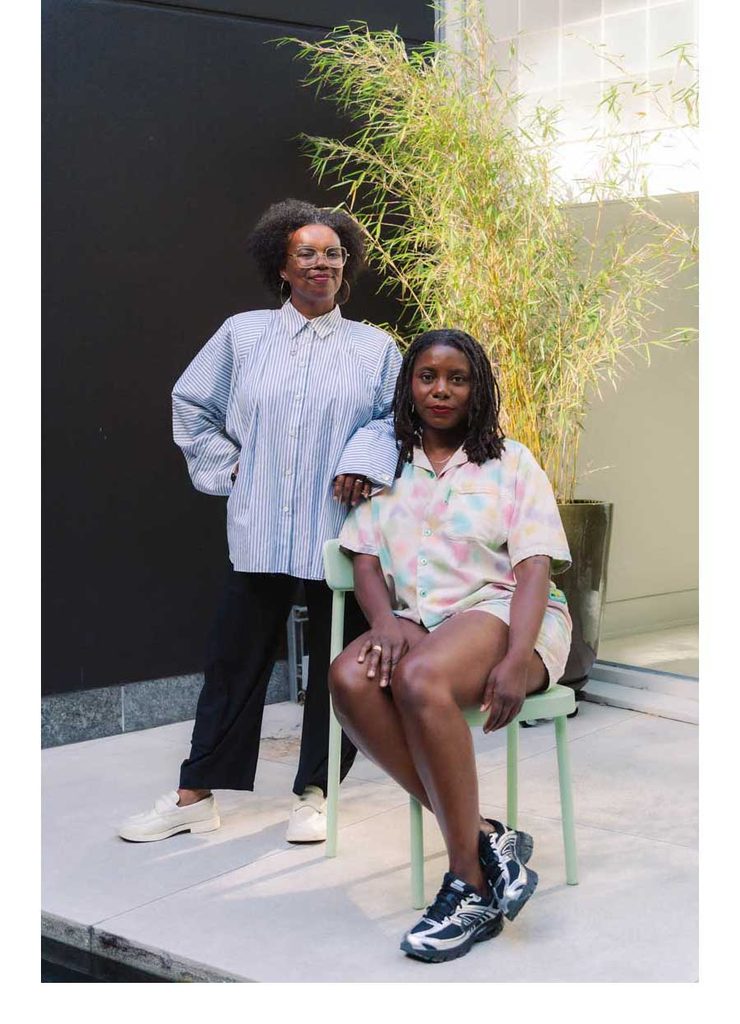
Bay Area Now 10 co-curators Essence Harden and Leigh Raiford. Photo by Fiona Duong.
Opening in the fall of 2028, Bay Area Now 10 will be the tenth edition of YBCA’s signature triennial. With its first iteration dating back to 1997, for over three decades Bay Area Now has both celebrated and investigated the art scene(s) of our region. BAN has helped to define trends, highlight underrecognized voices, and elevate the careers of some of San Francisco’s most beloved artists.
BAN 10 will be co-curated by Essence Harden (Senior Curator on staff at YBCA) and Leigh Raiford (Professor of African American and African Diaspora Studies at the University of California, Berkeley). The following conversation with Essence and Leigh touches on their curatorial approach, their collaborative partnership, and their observations to date.
Q: This will be both the tenth edition of Bay Area Now and will coincide with YBCA’s 35th anniversary. How are you approaching curating this show?
Essence Harden: Obviously, the world is in an intense state of chaos. The Bay Area is under immense duress now, as is the world, but it’s also been under immense duress before. I think anniversaries can provide a regrounding—in why we do what we do, and in the investments we make, as an institution, as a city, as a group of people.
Curatorially, Leigh and I are approaching the exhibition through an organic unfolding, grounded in trust in one another and in the Bay Area: what it’s done historically and what it’s doing now. We’re both historians, so there’s a deep investment in the history of places and how that shapes what we think, do, and how we believe. For us, the question is how do you make a picture of the Bay Area that’s in conversation with the rest of the world, while honing in on its particulars and specificity? What happens here has implications beyond the region, and that relationship between the local and the global can be a beautiful way of understanding ourselves and our place.
Leigh Raiford: In terms of curating the show, it’s deep research and also intense listening. Neither of us come from a traditional art historical background. We’re both rooted in Black studies and routed through Black feminism—an approach that means that we are committed to centering the most marginalized amongst us.
The beauty of being a historian is that you learn to think about change over time. The Bay Area has gone through many iterations, many waves of difficulty, of disinvestment and reinvestment, of abandonment. We have the advantage of being able to take that long view—to see how people have endured and how people have continued to make despite.
Q: Where are you at right now in the curatorial process?
E.H. I gave us a tall order of around 200 studio visits, because I think a tall order is the only way to go about doing something like this. You’ve got to see as much art over whatever period of time as possible. What that looks like is going to open houses, to exhibitions both gallery and museum, to see as much of the varying art communities that exist here. So, I think we’re a quarter of the way through. We started in the summer and it’s gotten more geared up in the fall.
L.R. The other part of the curatorial process is developing a clearer sense of the history of YBCA, trying to assemble the archive of catalogs, brochures, and all of the artists and curators who have participated in the last 10 iterations of Bay Area Now. We want to understand the ways that YBCA and Bay Area Now have contributed to the arts ecosystem here.
Q: How would you characterize the studio visits so far? What are you seeing out there?
L.R. They really have been a joy, just to see where artists are in their thinking and process, and to hear about their dream projects. What has been so incredible is the commitment to making art. Commitment even feels like too vague or light of a word for what we’re seeing. People are making art because they have no other choice.
E.H. It’s just like how people are living. What strikes me is that community and collectivity are practices, not simply things institutions create. Artists call on one another to make work, help move something, or make a performance possible. They’re recommending other artists, extending invitations, and finding ways to continue making together. That generosity is part of the practice itself.
L.R. Community is a verb here. On one hand, it is the work of the institutions to create the conditions for artmaking, it’s the work of YBCA and other museums and galleries and arts patrons. But what I think is becoming clear is that it’s also the work that artists do, right? They’re on the front lines of creating the conditions where they and their art and each other’s art can thrive.
Q: How does what you’re seeing relate to what’s happening in the Bay Area overall, if it does at all?
E.H. I think the idea of the Bay Area as a place beyond repair, or whatever, is simply not true. Having recently moved back, but being a third generation person from here, I’m so impressed by the artists here, by people who are fighting every day to keep making—teaching or working multiple jobs to keep the lights on and the bills paid. And the art people are making is inspiring, interesting, conceptual, and rich. We’ve only begun our studio visits, and already there’s so much extraordinary work. I’ll walk into a studio and think, damn, that’s such a cool, weird idea. Even in a really tough marketplace people are still willing to extend themselves. There’s something about that impulse in California artists that I’ve always loved. That insistence on trying, on figuring out how to do the thing, is something I find deeply moving about this place.
Q: What’s it like working together? What are you each bringing to this process?
E.H. I love working with Leigh. We met when I was an undergraduate at Berkeley, and how I understand my curatorial work was cemented in how I was trained by Leigh as a graduate student, also at Berkeley in the African Diaspora program. Leigh has been either an active or silent partner in how I think since we met. It’s a pleasure and a delight to work with Leigh, and an example of how you can have a long-term relationship with someone that can change and develop.
L.R. I can’t believe my luck and good fortune, to work with this incredibly talented, visionary, fully-badass fearless person. I marvel at how good you are at this and what a sharp vision you have.
For me, growing up in New York City in the 80’s and 90’s, there wasn’t a clear path for me into curatorial work; without a degree in Art History, I wasn’t able to get into the museum world in a formal way. So it’s a dream to build something together, to push each other to different imaginaries as to what an exhibition can be. It’s a gift. Words are too small.
E.H. When you’ve worked closely with someone for so long, everything can be a draft. You can put a mess of ideas on the table and we can line edit those together. I love that we get to think out loud together. It makes you less precious about any one idea, and more open to what an exhibition could become.
Q: What can people expect next?
L.R. Over the next few months, we’ll be out and about in the community, making studio visits through the spring. I think we’re getting into the ramping up season, things are starting to come together.
E.H. You’re going to see us outside. I can be pretty extroverted, so if you see me, please come say hello. Invite us to things, let us know what’s happening, and send along suggestions.
We’re two people with full lives, so we can’t see everything, but also this is important work. Even when we can’t be in every room, I think knowing what’s happening across the Bay Area is part of the process. There’s so much happening here, and we want to remain open to what we haven’t yet encountered. We’ll try our best. That’s all we can do, keep trying.