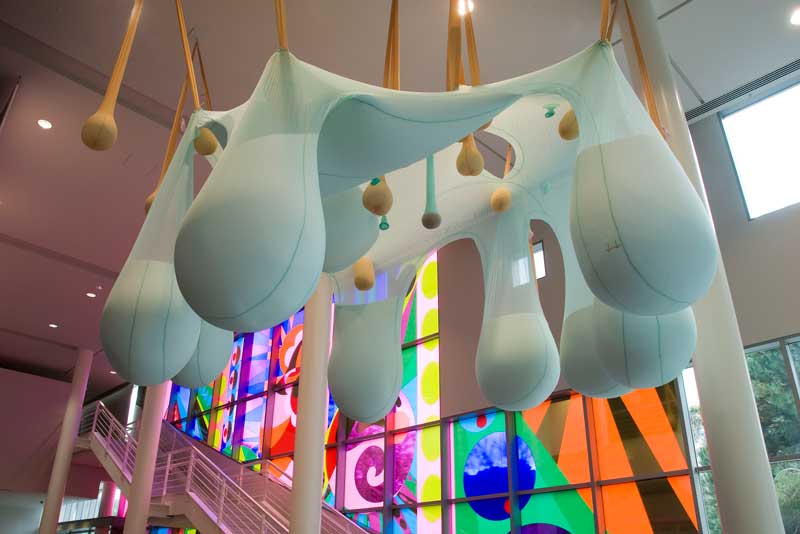
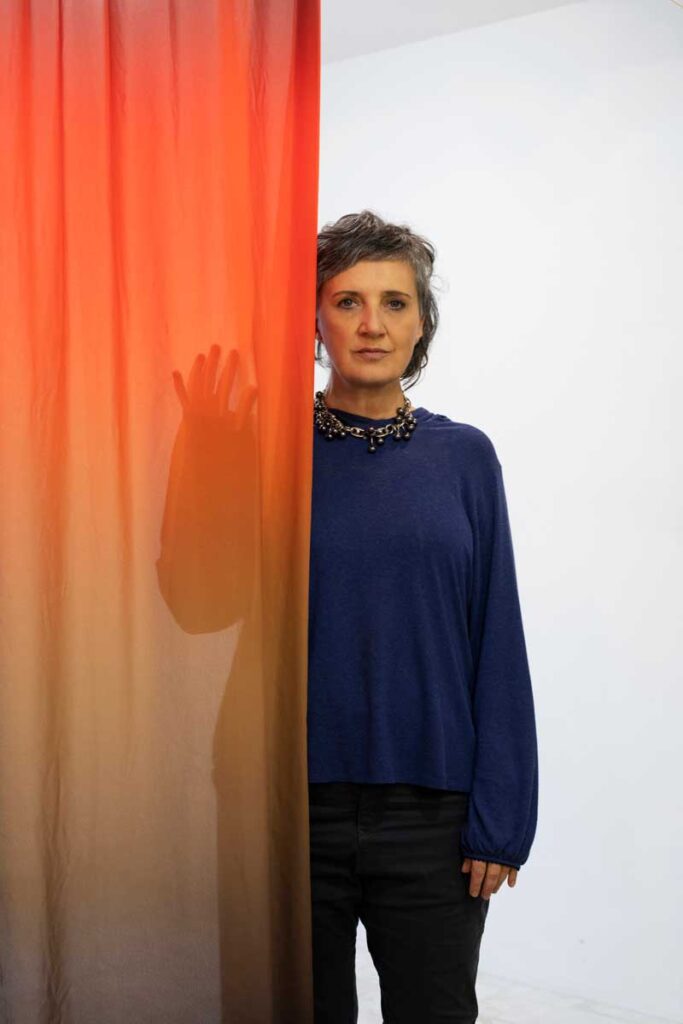
Lucia Koch looks to the surfaces of buildings and architectural spaces as a platform for her work in photography and video. By introducing optical filters and lighting, she alters the forms of a building’s compositional elements and even changes its original function. Koch’s Olinda-Celeste (2005) is a video work employing Portuguese azulejo wall décor tiles she found in the historical city of Olinda. In this work, a camera wanders across a tile wall in varying directions and at varying speeds. As the video progresses and successive tiles of differing design appear, an illusion is created in which the wall continues on infinitely. The camera shifts erratically and the differing tiles appear to grow larger but then the camera zooms out again and finally returns to the pattern of tiles shown at the onset. Whether working in two dimensions or three, Koch introduces moving elements in a static situation, thereby slightly altering a familiar place or scene and causing us to re-examine our physical relationship with our environment.
Mon September 21st Open 11 AM–5 PM