Thu April 25th Open 11 AM–5 PM
Exhibitions
Bay Area Now 9
Presented by YBCA
October 6, 2023–May 5, 2024
The ninth iteration of YBCA’s signature triennial exhibition highlighting 30 artists working throughout the Bay Area’s nine counties.
Tours
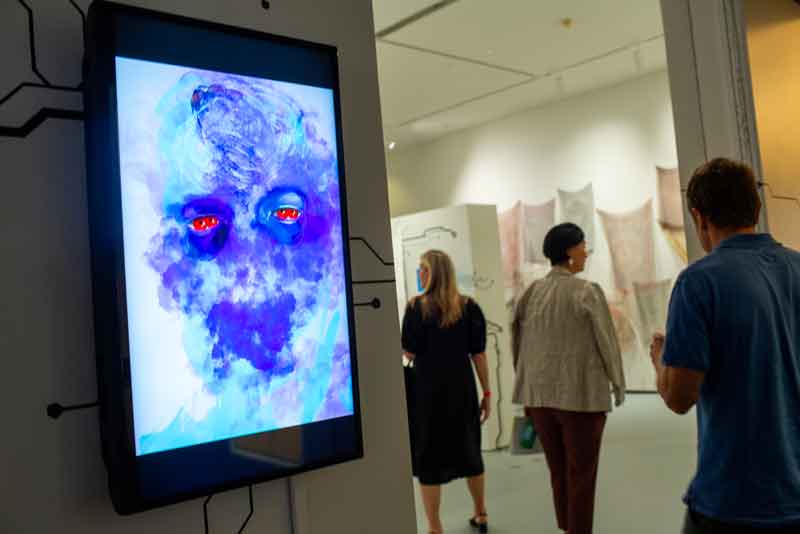
Curator-Led Tour of Bay Area Now 9
A free curator-led tour to learn more about the exhibition, background of key pieces, insider details, and more.
+ Read more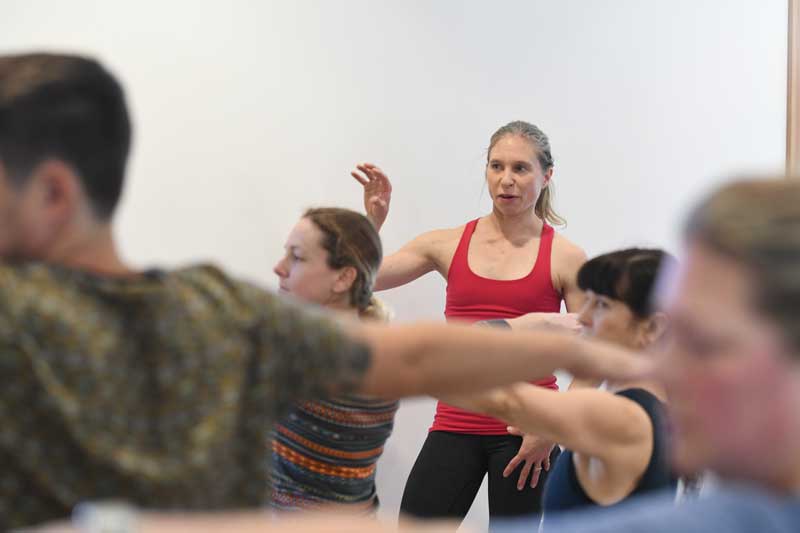
Workshops
Art + Asana: Free Yoga Class
Presented by YBCA
A free yoga class where you can find your flow while immersed in the art of our ongoing exhibition Bay Area Now 9.
+ Read more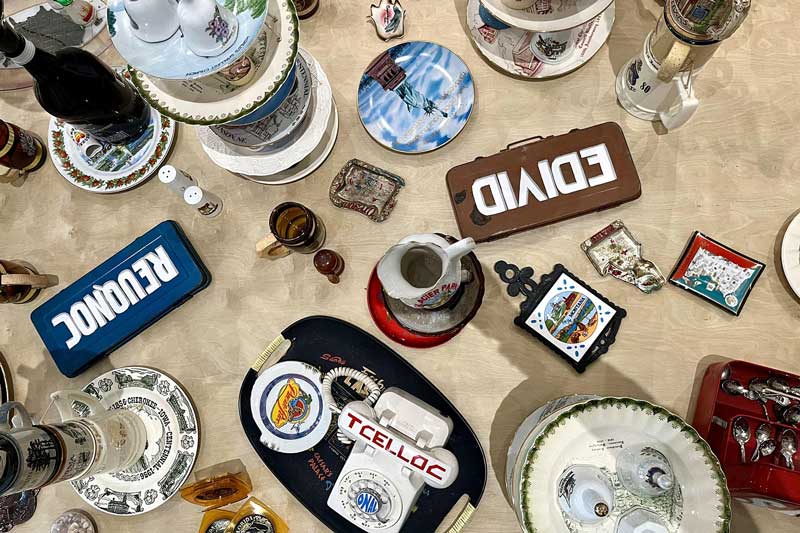
Public Programs
Trophy Room—Dispersal Sale!
Presented by YBCA
As BAN9 draws to a close, everything must go from Michael Arcega’s installation Trophy Room. Join the artist at YBCA as he opens up shop.
+ Read more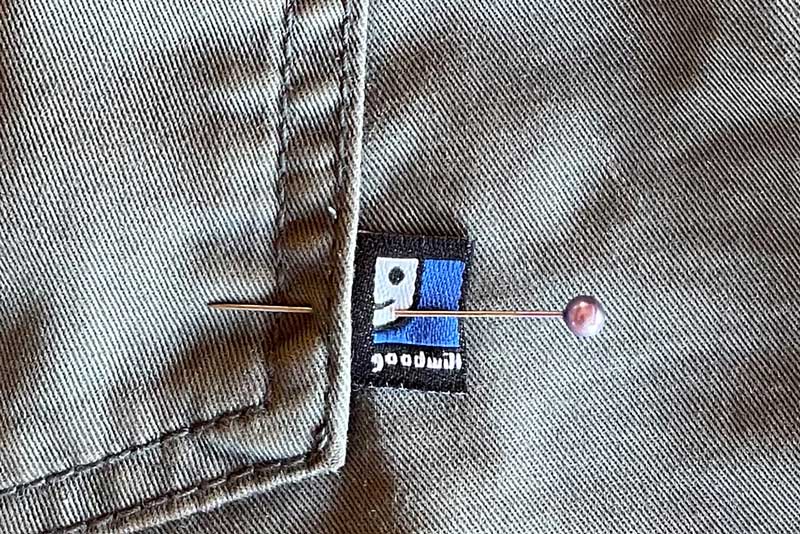
Public Programs
Goodwill Label Stories
Pop-up with artist Lynda Grose
A dynamic conversation on second-hand clothing, sustainability and the fashion industry at this interactive pop-up event. Bring your own thrifted garment or browse a selection from Goodwill to take home.
+ Read more
Workshops
Art + Asana: Free Yoga Class
Presented by YBCA
A free yoga class where you can find your flow while immersed in the art of our ongoing exhibition Bay Area Now 9.
+ Read more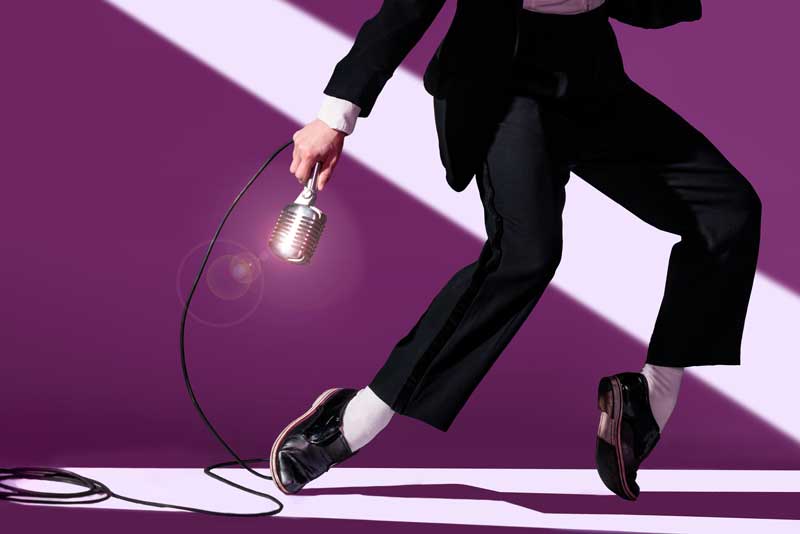
Dance
Dance Series 2
Presented by Smuin Contemporary Ballet
Featuring a world premiere by Annabelle Lopez Ochoa as well as pieces by Amy Seiwert, Brennan Wall and Michael Smuin.
+ Read more
Public Programs
Trophy Room—Dispersal Sale!
Presented by YBCA
As BAN9 draws to a close, everything must go from Michael Arcega’s installation Trophy Room. Join the artist at YBCA as he opens up shop.
+ Read more
Public Programs
Goodwill Label Stories
Pop-up with artist Lynda Grose
A dynamic conversation on second-hand clothing, sustainability and the fashion industry at this interactive pop-up event. Bring your own thrifted garment or browse a selection from Goodwill to take home.
+ Read more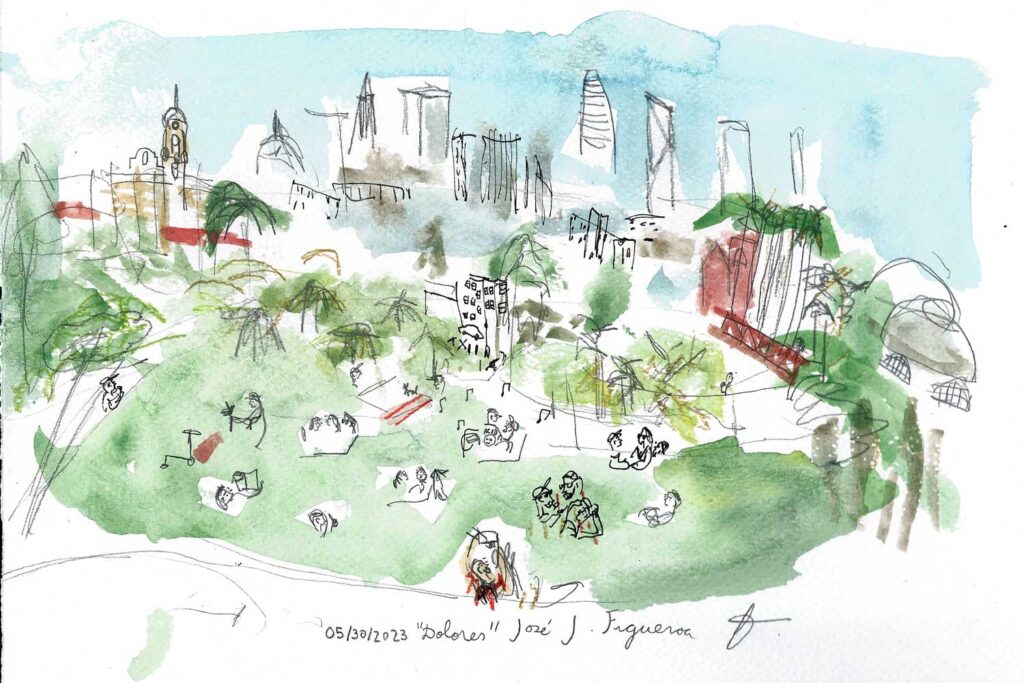
Workshops
Sip & Sketch: José Figueroa
Presented by YBCA
Grab your sketching tool of choice, your beverage of choice, and a seat for Sip & Sketch with BAN9 artist José Figueroa.
+ Read more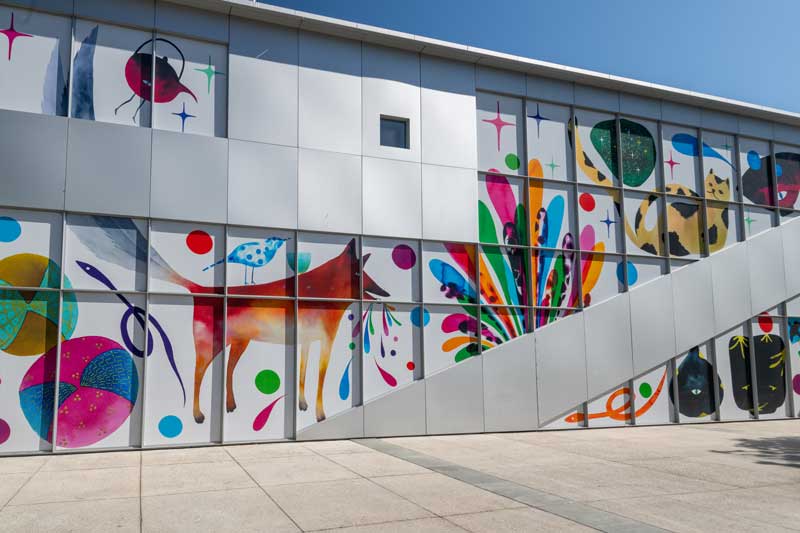
Public Art
Hyakki Yagho, Night Parade of One Hundred Demons – One Million Years of Journey with Ruby Red Fox and Their Company
Masako Miki
This work takes inspiration from Japanese folklore and asks viewers to pause and reflect on the provocative narrative and their connection to it.
+ Read more2023–ongoing
Exterior Lobby Windows, YBCA
Public Art
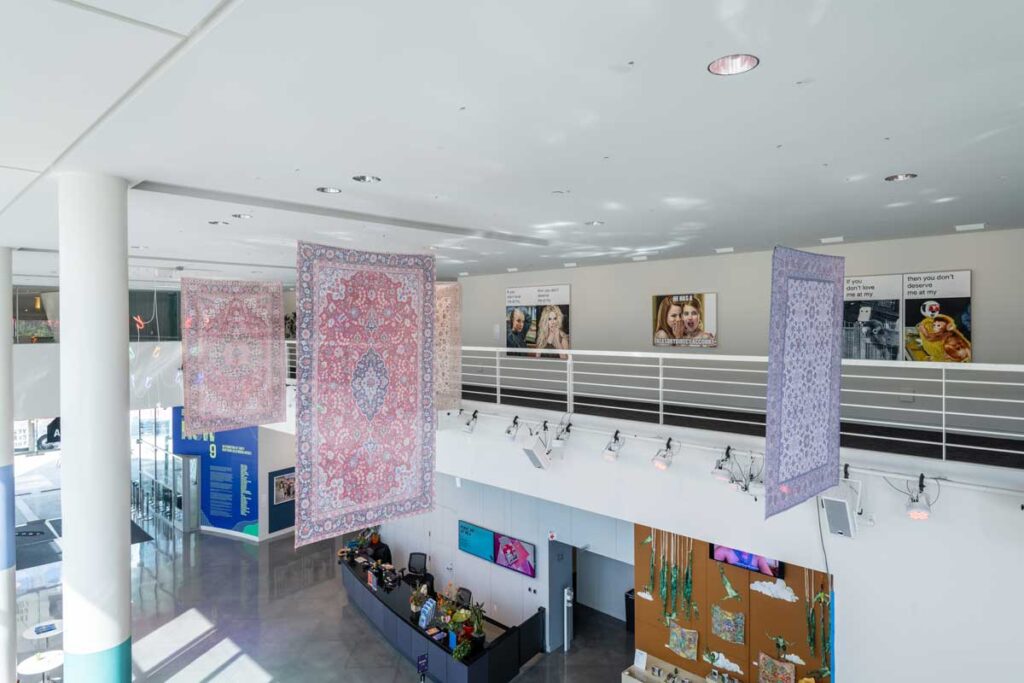
Revolution
Shirin Towfiq
A series of Persian rugs printed on gauzy fabric, hangs in YBCA’s Grand Lobby to offer a space for reflection and inspiration.
+ Read moreOctober 6, 2023–May 5, 2024
Grand Lobby, YBCA
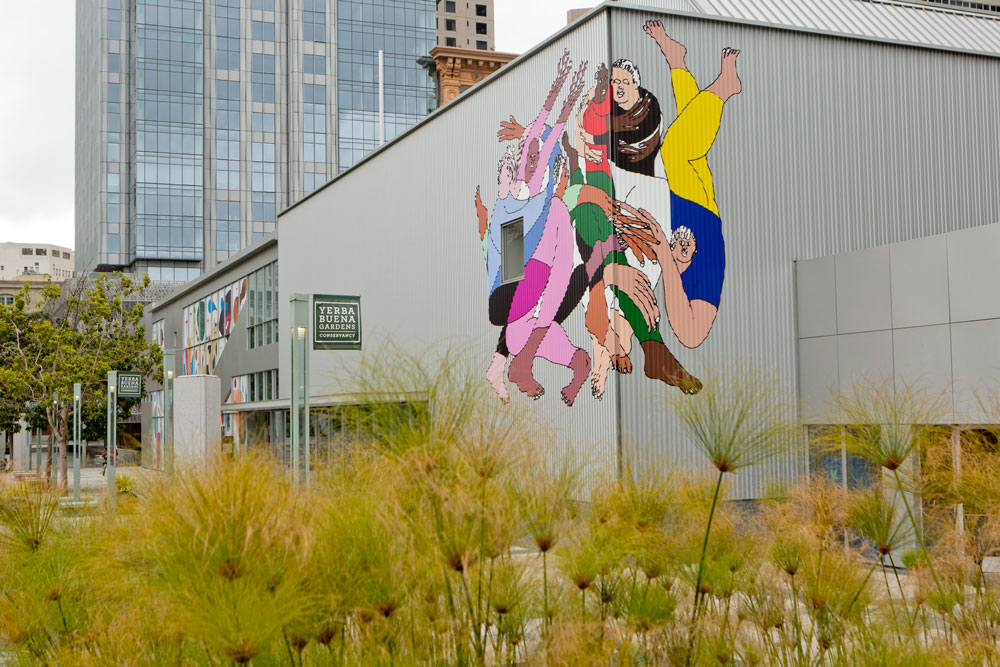
Public Art
Ceasefire Now!
Jeffrey Cheung
A public artwork meant to inspire a sense of communal solidarity.
+ Read more2024–Ongoing
Exterior Forum Wall, YBCA
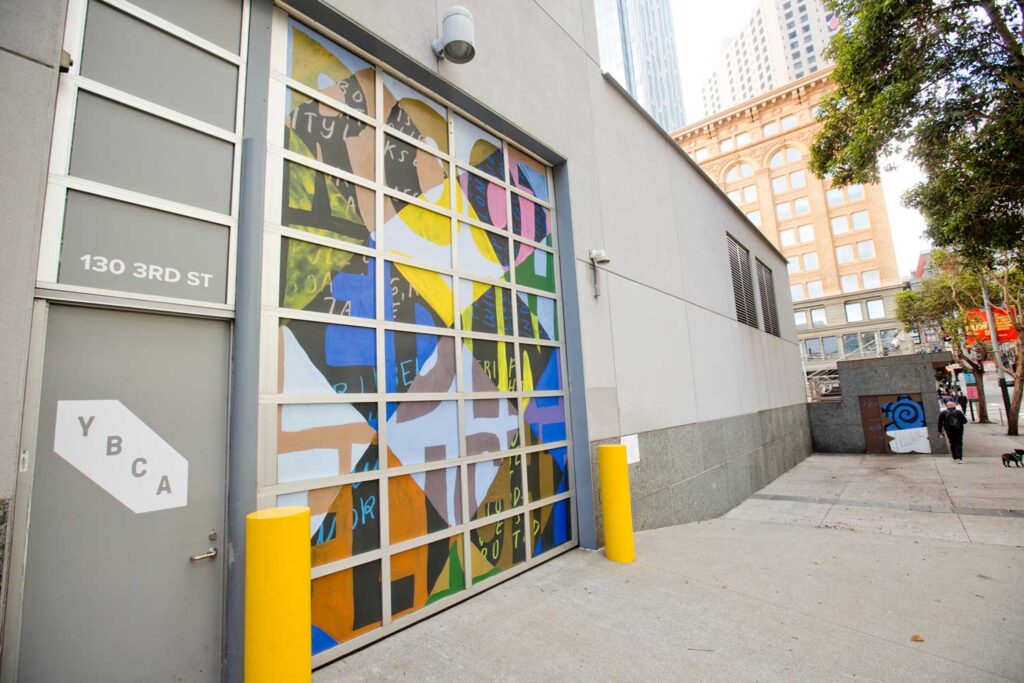
Public Art
We fly for a liberated we, we rooted in flight
Lukaza Branfman-Verissimo
A public artwork inviting passerbyers to join in the journey of collective flight
+ Read more2024–Ongoing
Third Street Exterior, YBCA
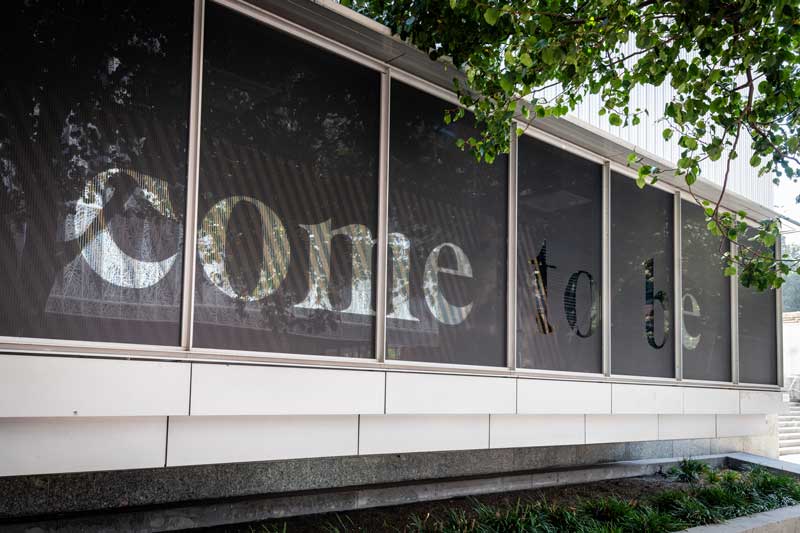
Public Art
The Chapel of Becoming
Leila Weefur
An invitation to enter the video installation and transcendental space dedicated to and in celebration of the Transgender community.
+ Read more2023–ongoing
Mission Street, YBCA
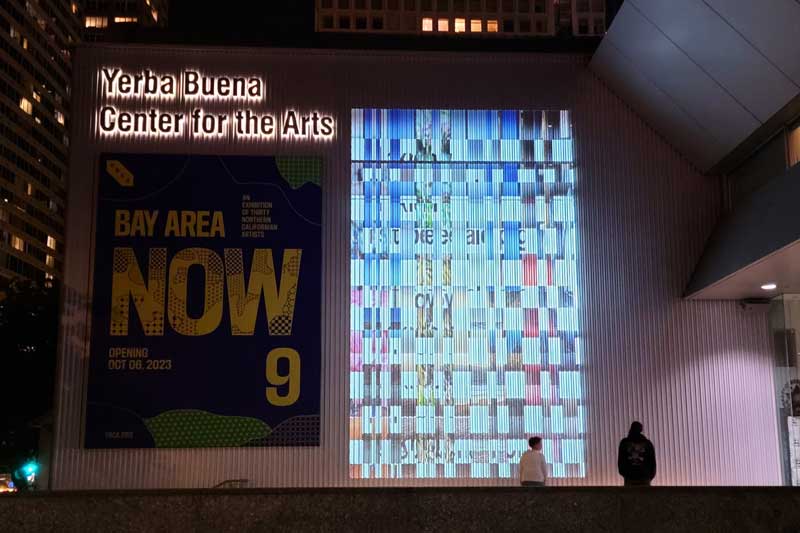
Public Art
TEXERE
Indira Allegra
An ongoing, interactive digital weaving presented as an outdoor installation visible after sunset.
+ Read moreOctober 6, 2023–May 5, 2024
701 Mission Street Plaza, YBCA
Public Art
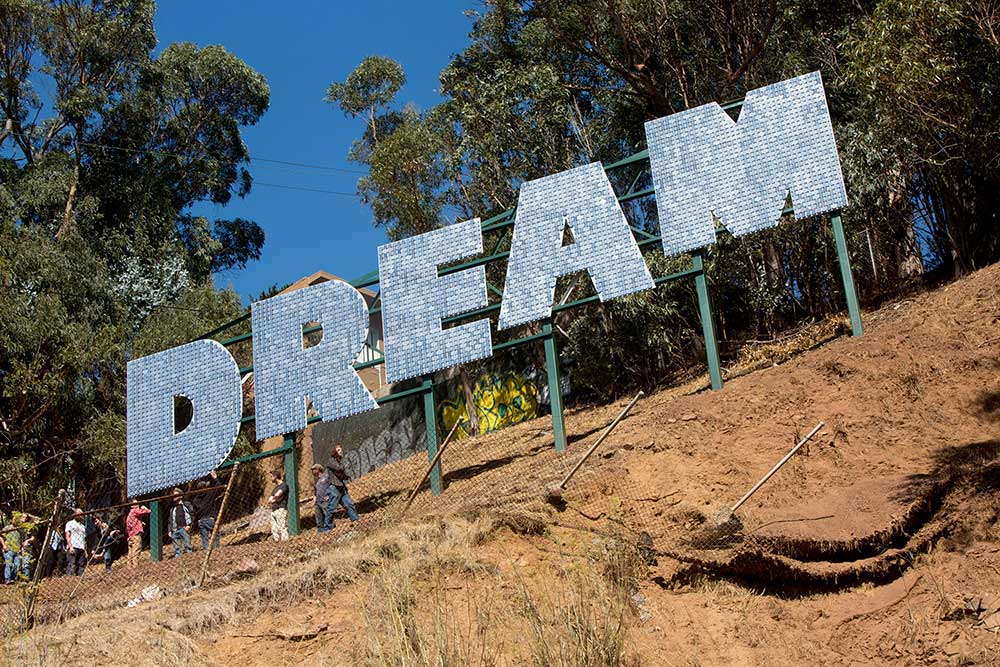
Dream
Ana Teresa Fernández
A public art installation commissioned by YBCA and co-sponsored by San Francisco Public Works.
+ Read moreOngoing
Bernal Hill, San Francisco
Public Art
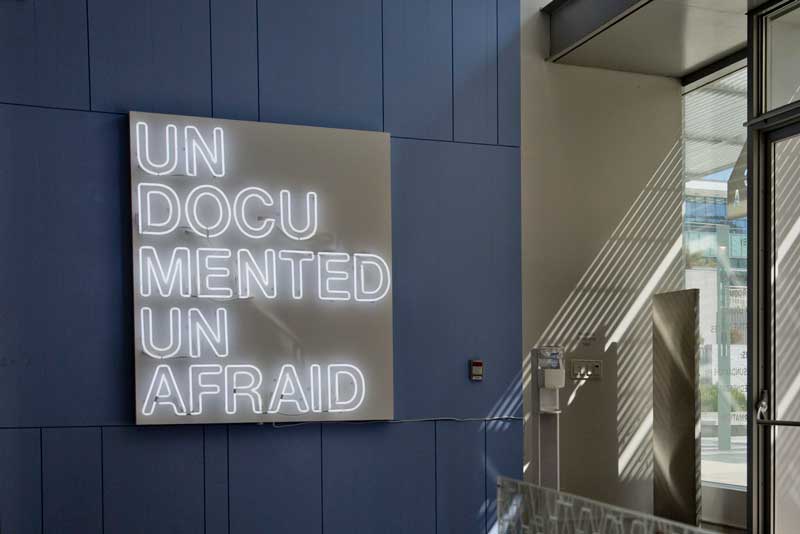
UNDO MEN
Sanctuary City Project
This work shines light on the power of the student-led pro-immigrant movement while examining the impact of policies on the lives of the undocumented community.
+ Read more2023–ongoing
Grand Lobby, YBCA
Public Art
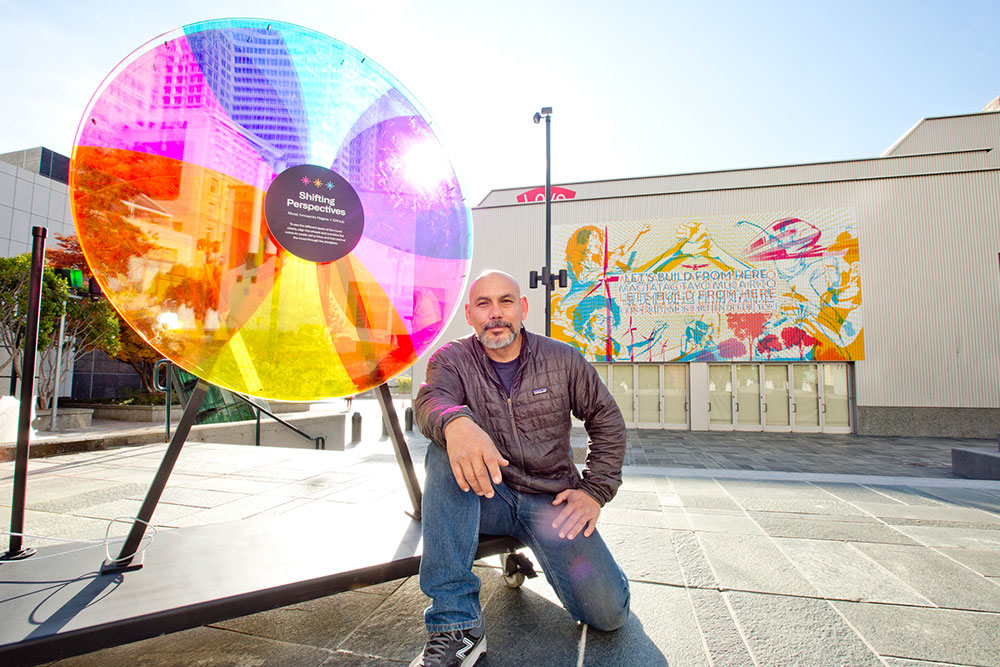
Let’s Build from Here
Innosanto Nagara
A site-specific public artwork highlighting the power of collaborative future-building.
+ Read more2022-ongoing
East Gardens, YBCA
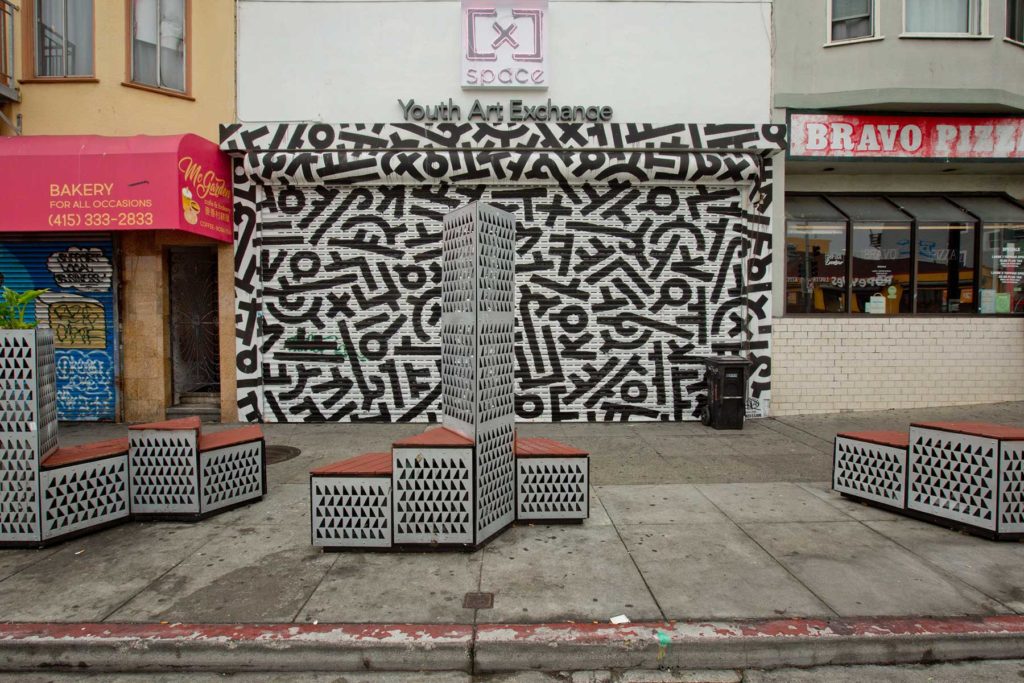
2022-ongoing
Mission Street at Geneva Ave., Excelsior Ave. and Onoganda Ave., San Francisco
Public Art
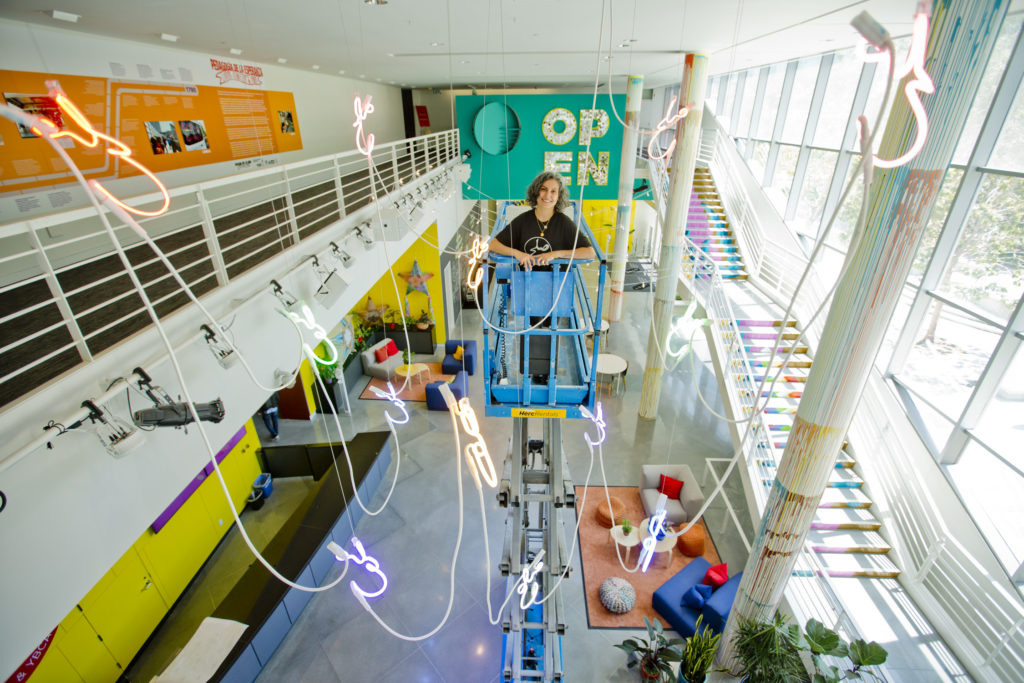
Peace in the Middle East
Taravat Talepasand
This work refers to the translation of the word “peace” in Farsi “صلح” sculpted with neon.
+ Read more2022-ongoing
Grand Lobby, YBCA
Public Art
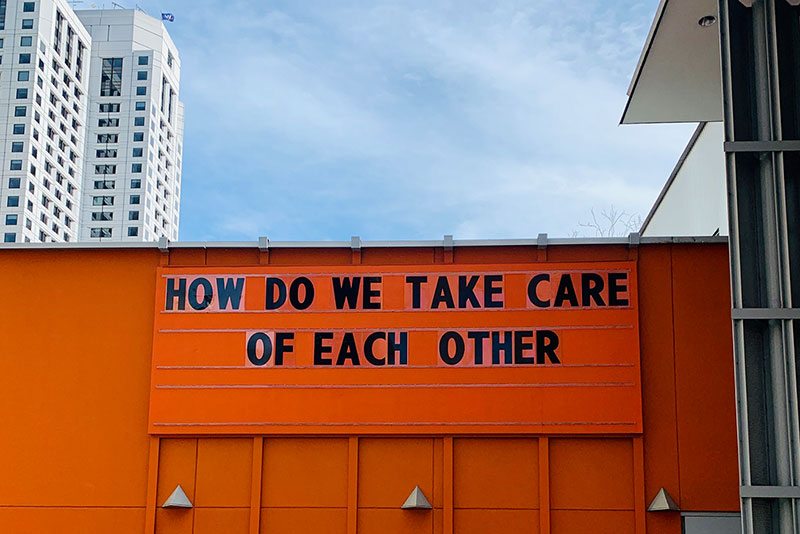
Statement marquee from Escuela de Arte Útil (School of Useful Art)
Tania Bruguera
YBCA continues to activate the marquee with timely and responsive messages generated from artists and community partners.
+ Read more2017–ongoing
Third Street Courtyard, YBCA
Public Art
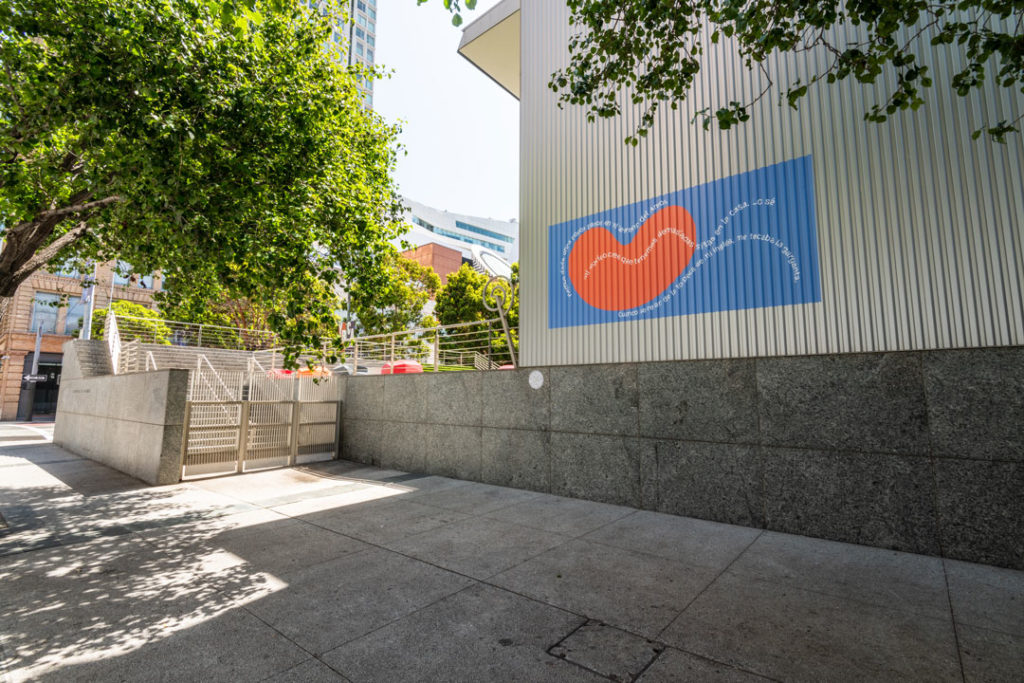
love @ first line
Anna Sergeeva
A new site-specific public artwork by Anna Sergeeva featuring the first lines of love poems.
+ Read more2021–ongoing
Exterior, YBCA